
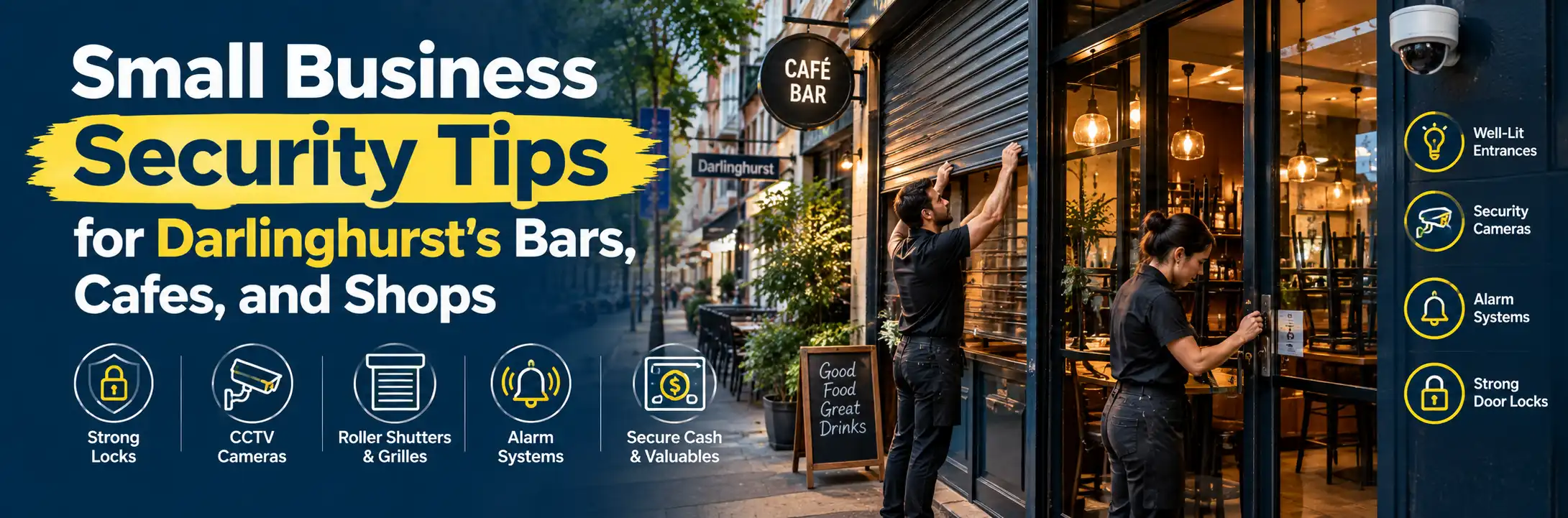
Running a bar, cafe, or small shop in Darlinghurst means dealing with a level of foot traffic, late-night activity, and shopfront exposure that a quiet suburban business simply doesn’t face. Security here isn’t an afterthought — it’s part of the daily routine.
The good news is that meaningful security doesn’t require a complete overhaul. Small, consistent changes make the biggest difference, and most of them cost very little to put in place.
What Small Business Security Actually Means Day to Day
Here’s the short answer: security tips for small business owners aren’t really about one big investment — they’re about consistent daily habits, the right physical hardware, and knowing your weak points before someone else finds them first.
A business that locks up the same careful way every single night is far harder to target than one that treats security as an occasional afterthought. Consistency matters more than any single upgrade, and it’s usually the businesses with predictable, careless routines that end up dealing with a problem.
Why Darlinghurst’s Nightlife Strip Faces Unique Risks
Darlinghurst’s mix of bars, cafes, and retail creates a specific risk profile worth understanding properly before deciding where to focus your effort.
Late-Night Trading and Foot Traffic
Venues trading late into the night deal with a different rhythm of risk than a business that closes at five. High foot traffic, groups of patrons, and the general energy of the strip all create more opportunity for opportunistic issues if basic precautions slip, particularly around closing time when a venue is at its busiest and most distracted.
Shared Laneways and Rear Entry Points
Many Darlinghurst venues share laneway access or rear entries with neighbouring businesses. These shared spaces are convenient for deliveries and staff, but they’re also an easy access point if not properly secured after hours, especially where several businesses share the same laneway and nobody takes clear responsibility for it.
Shopfront Security Tips Worth Prioritising
Your shopfront is the first thing anyone sees, and it’s worth treating as your primary line of defence.
Reinforced Glass and Roller Shutters
Standard shopfront glass offers minimal resistance on its own. Reinforced or laminated glass, paired with a roller shutter for overnight closure, is one of the most straightforward shopfront security tips available for street-facing businesses, and it pays for itself in peace of mind alone.
Visible Deterrents That Actually Work
Visible cameras, clear signage, and well-lit entries genuinely reduce risk simply by making a venue look less like an easy target. This is one of the cheapest security upgrades available, and often the most overlooked, particularly by newer venues focused entirely on fit-out and branding.
Securing Cash and Valuables On-Site
Cash handling is where a lot of small hospitality and retail businesses have the biggest day-to-day exposure.
Till and Cash Drawer Lock Security
A till and cash drawer lock security routine should be part of every closing shift, not an occasional check. Drawers left unlocked overnight, even in a locked venue, are an unnecessary risk that takes seconds to avoid, and it’s worth building into a written closing checklist rather than relying on memory.
Safe Placement and Access Control
A safe should never be visible from the street or an obvious first stop for anyone who gets past the front door. Limiting who actually knows the safe’s location and combination is just as important as the safe itself, and that list should be reviewed every time staff turnover happens.
“A locked door protects the building. Knowing who has access to what’s inside protects the business.”
After Hours Business Security
What happens after closing time often matters more than what happens during trading hours.
Locking Up Checklist for Closing Staff
- Confirm every external door and window is fully locked, not just closed
- Check that the till and any cash drawers are properly locked and emptied
- Set the alarm system before the last person leaves
- Confirm roller shutters or grilles are fully lowered and secured
- Report anything unusual immediately rather than waiting until the next shift
Alarm and Monitoring Considerations
Test your alarm system monthly rather than assuming it works, since a fault often only becomes obvious after an actual incident.
It’s also worth confirming that whoever monitors your alarm has current contact details for at least two staff members, not just the owner, in case they can’t be reached immediately.
Commercial Door Locks and Access Control for Small Teams
Even a small team benefits from thinking about access control the same way a larger business would.
Commercial Door Lock Installation Basics
Commercial door lock installation for a small venue should prioritise high-security commercial locks over standard residential-grade hardware, particularly on any rear or laneway entry. These doors see far more use and exposure than a typical front entry, often being opened dozens of times a day for deliveries and staff.
Master Key Systems for Small Teams
Even with just a handful of staff, a simple master key system for office or venue use makes managing access far easier than duplicating full sets of keys for every team member. If you ever need a fast fix outside trading hours, having a commercial locksmith Darlinghurst businesses already trust on call makes all the difference.
Reviewing Access as Staff Change
Hospitality and retail businesses tend to have higher staff turnover than most industries, which makes reviewing who holds keys or codes a genuinely important habit rather than a one-off task. Removing access the same day someone leaves closes a gap that’s easy to forget about once things get busy again.
Working With Neighbouring Businesses on Shared Spaces
Where a laneway or rear entry is shared with other venues, it’s worth having a quick conversation with your neighbours about basic shared standards, like keeping the area well lit and reporting anything unusual to each other. A single unsecured entry among several shared businesses puts everyone at risk, not just the venue that left it unlocked.
Some Darlinghurst strips have informal arrangements where neighbouring businesses look out for each other’s shopfronts after hours, which costs nothing and genuinely helps.
Training Staff to Notice the Small Things
Security isn’t only about hardware — staff who know what to watch for are one of the most effective tools available. A quick induction covering the closing checklist, who to call if something feels off, and how to handle an unexpected after-hours knock goes a long way, especially in a venue with regular staff turnover.
Revisiting this training every few months, rather than treating it as a one-time induction task, keeps these habits front of mind rather than something staff vaguely remember from their first week.
Conclusion
Security for a small Darlinghurst business doesn’t need to be complicated — it needs to be consistent, practical, and built into the daily routine.
From a proper shopfront setup to a reliable closing checklist and the right hardware on your doors, small habits done every single time beat an expensive system that nobody actually uses properly.